Methane reduction technologies for livestock are continuing to attract a lot of interest globally. There are so many fantastic companies developing feed additives, boluses, vaccines and microbiome approaches.
Either companies have an interest in pastoral farming from the outset, or they develop their products in mixed ration feeds first, and then move to pastoral systems.
While many methane reduction technologies show promising results in in controlled environments, generating reliable efficacy data for animals at pasture is quite different. Unlike housed animals, grazing cattle and sheep are exposed to a lot of variability in the environment, grass quality and quantity (depending on the time of the year) as well as a lot more space for animals to move around in.
Over the past several years, we have been involved in the design and delivery of many pasture-based studies for animals at pasture in both New Zealand and Australia and here are some of the learning lessons in no particular order:
- Accurately measuring DMI is really not possible. You can attempt it at a group level, by measuring pre-and post grazing residuals, but it is inaccurate. For pastoral studies, we recommend steering away from methane yield and focus on percentage reduction or reduction in methane intensity.
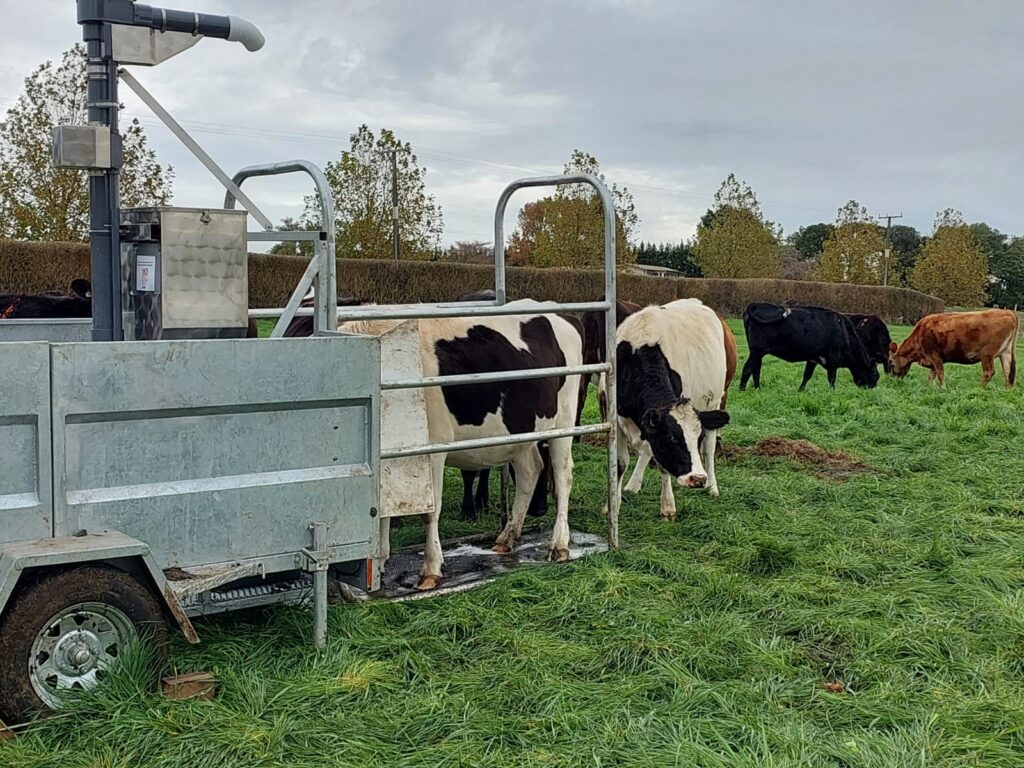
- Cattle LOVE their treats in the machines that are measuring methane, but when they are training to learn to use them, they need to be in a confined environment first, not allowed access to a full paddock/field. This helps with faster and more effective training.
- Its not worth trying to speed up the training process for the methane measuring machines. Monitoring use closely and swapping out high users that have trained early to give shy users more of a chance, helps with encouraging more animals to use them.
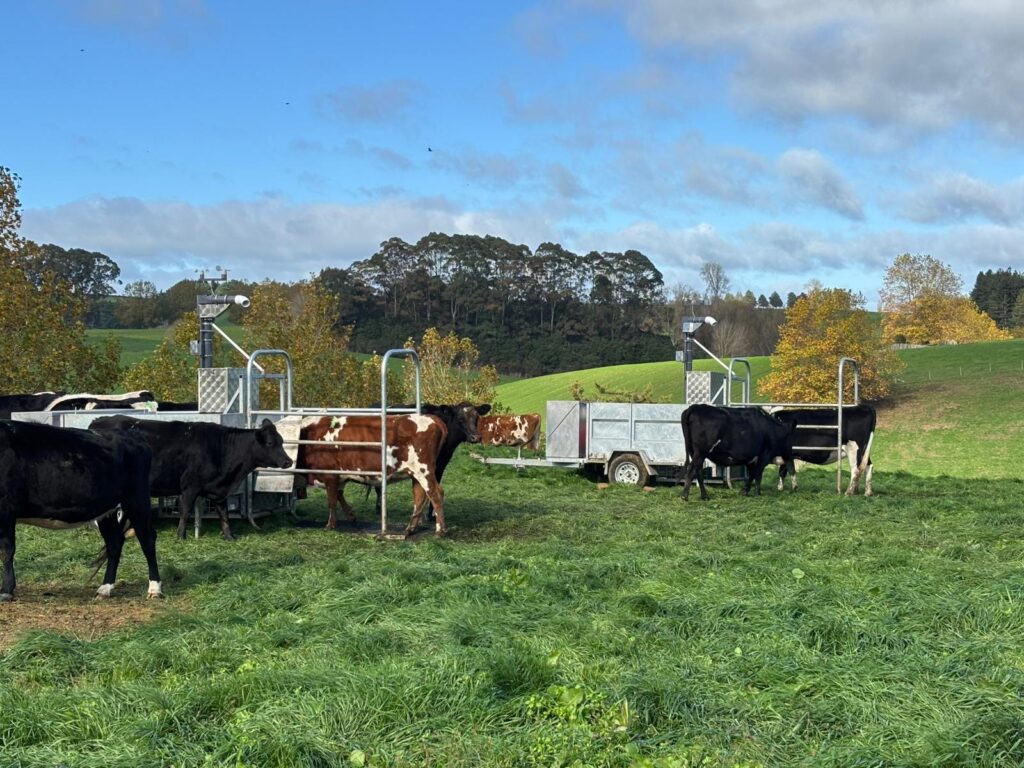
- Using a smaller ratio of machines to animals is important for best use. We prefer multiple machines in with cattle at a time and a ratio of 1 machine:20 animals. We have done many different ratios and other ratios can work, this is just our preference for maximum use, especially if there is a lot of pasture available. Its less of an issue in limited pasture feed situations.
- Methane outcomes for animals on pasture are more variable than in mixed ration feeding. This is due to the variability in quantity and quality of the pasture they are eating. This means that usually more animals are needed to be able to prove a reduction with statistical significance.
- Season is an important consideration of when you are doing the studies. The conditions change every year, across the country/state and season. It not only changes the pasture quality and quantity, it changes the weather which has practical implications. For example, carrying out studies out at pasture in the winter and early spring in New Zealand is very challenging due to how wet the ground is. It causes A LOT of mud and pugging around the machines or troughs that they are being fed with (if it’s a feed additive product). Carrying out studies during summer in Australia can be challenging due to feed availability, so animals need to be supplemented with Hay and silage, which needs consideration.
- Finding animals withing a set weight range (if that is what you need), can depend a lot on the season and beef/lamb price. Sometimes, you may need to buy the cattle/sheep you need for the trial to ensure they meet your needs.
- Open-circuit respiration chambers are considered the gold standard for methane measurement and are very useful, in early stage development, they also represent only a short snapshot. This limited window cannot capture the full biological response relevant to real farm settings. Machines used out at pasture allow repeated estimates of methane production from the same individual over extended periods. This creates an important advantage so emissions can be tracked throughout time rather than captured within a short measurement window.
- Analysing the data the right way is critical. This is because methane inhibition can change over time. In one EpiVets pastoral study using greenfeed machines, the high-dose treatment effect was strongest during the middle of the trial but converged towards the control group by the end of the study. Other studies have shown big reductions at the start and end of the trial period and then not in the middle. Because the treatment-by time interaction is strong in these situations, annualising the result or even using the mean over the time period is just not appropriate. This illustrates why repeated longitudinal measurement is essential; a product can look effective at one time point but have a different outcome once persistence, waning, adaptation or feeding behaviour are considered.